
Harrison County Arrest Records and Court Charges
A Harrison County arrest record documents the arrest itself. It names the person taken into custody, the agency that made the arrest, the booking date, and the early charges noted at intake. The Harrison County Sheriff's Office runs the Adult Detention Center in Gulfport and keeps the jail docket where these bookings first show up. An arrest is only the start of the process. Once a person is booked, a prosecutor reviews the matter and decides which formal charges to file with the court clerk. Those filed charges become the court charge record that follows the case from start to finish.
The Harrison County Sheriff's Office is led by Sheriff Matt Haley, whose law-enforcement background is described on the office administration page.
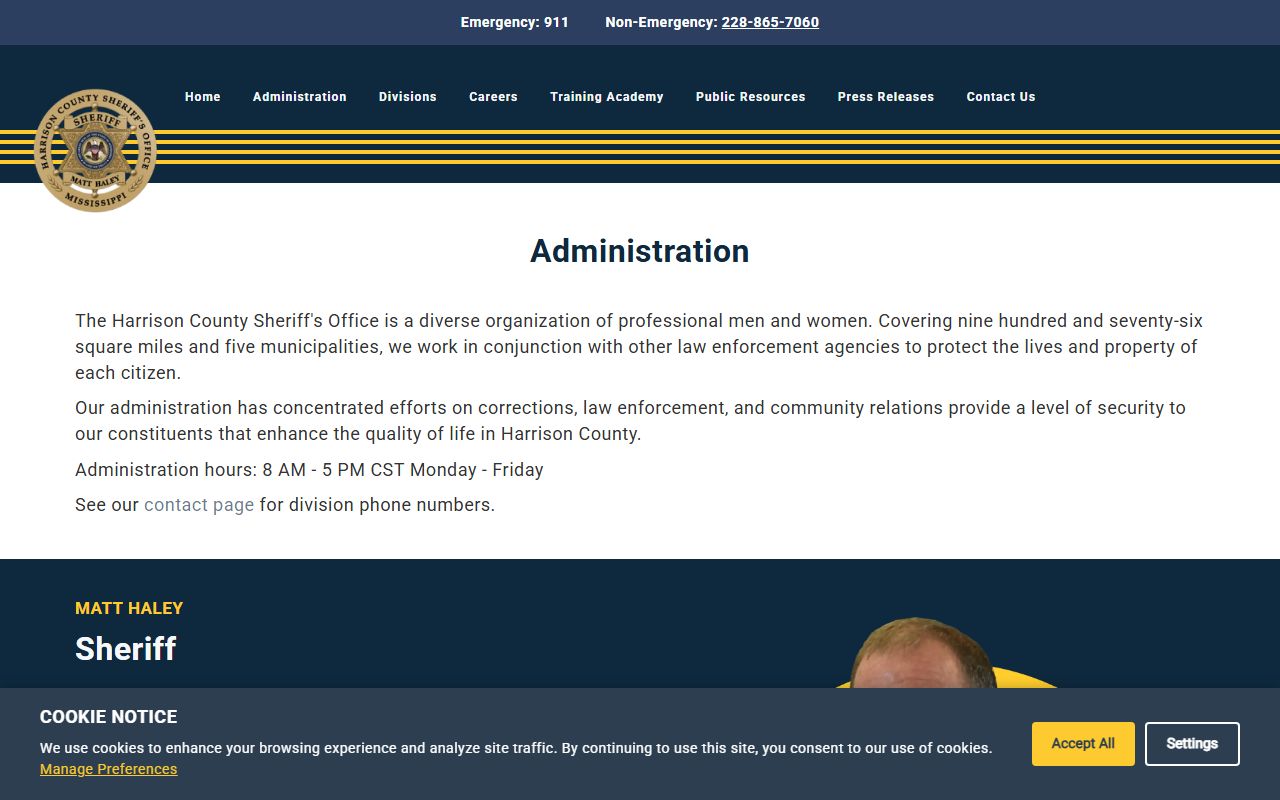
The Sheriff's Office controls the booking side of an arrest, while the prosecutor and the courts control the charges. That split is why one search rarely answers every question.
The arrest record and the court charge record are not the same file. The booking detail lives with the Sheriff, and a current jail listing appears on the Harrison County inmate records page along with the roster. The court charges after arrest are what the prosecutor actually files, and they are tracked through each hearing. The full case file, with pleas, disposition, and sentence, sits in the Harrison County criminal court records. A jail record alone does not show how a charge ended.
How to Find Harrison County Arrest Records and Charges
Charge data sits in two places. Early charges after an arrest appear on the Sheriff's jail docket, the affidavit filed in Justice Court, and the bond paperwork. Later charge data appears in the Circuit or County Court file once a prosecutor files an indictment or information. The county runs free docket search tools by court type, but those tools show the schedule, not the full file. To trace a charge from booking to court, a person should check the jail docket first and then the court docket.
The official Harrison County inmate search is the fastest look at who is currently booked and on what early charges.
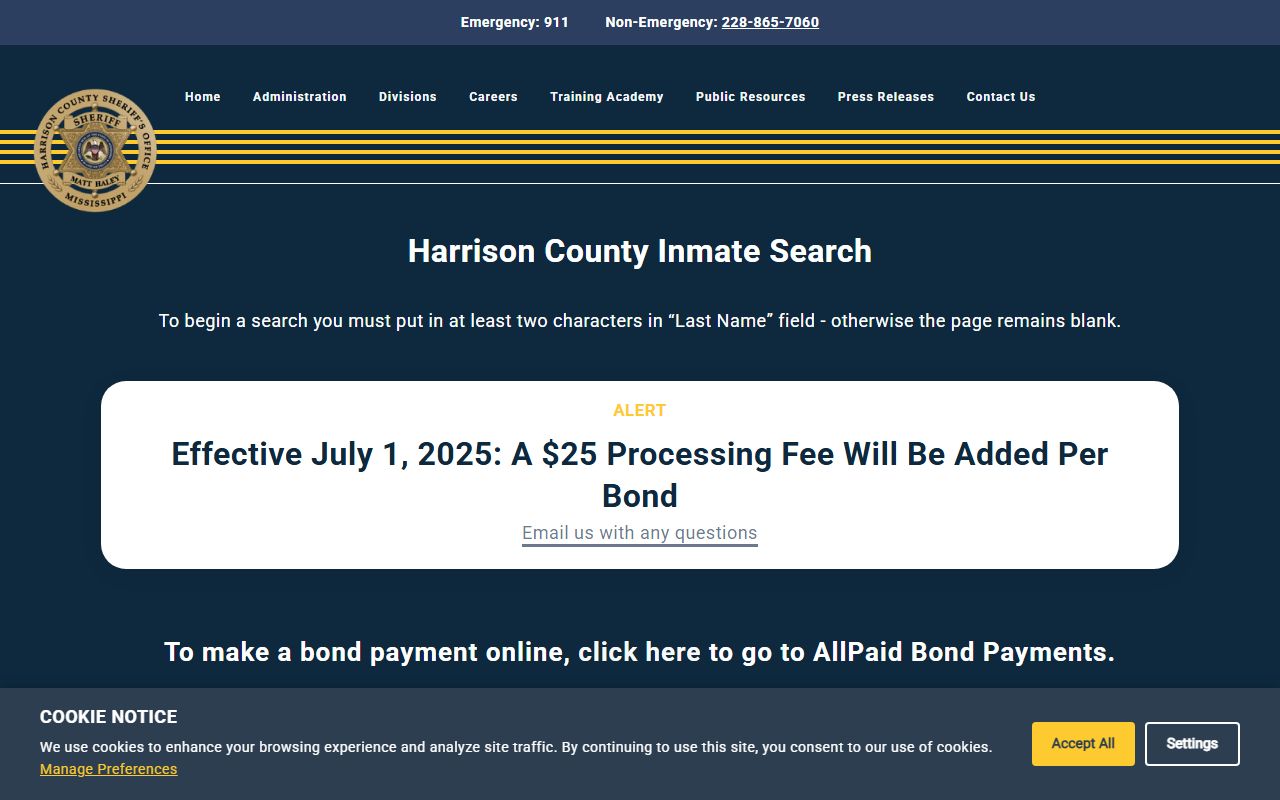
The inmate search page asks for at least two letters of a last name before it returns any results, and the Sheriff warns that listings can change quickly.
- Open the Harrison County inmate search to confirm the booking and the early charges.
- Move to the county docket search for Circuit, County, or Justice Court and search by defendant name or case number.
- Open the matching case and read the full charge list as the prosecutor filed it.
- Check each charge for its statute code, its level, and its current status.
- For the document itself, contact the Circuit Clerk or the Sheriff's records division.
When the online tools fall short, the fallback is direct contact. The Sheriff's Public Records Department handles report and arrest-record requests by phone at 228-896-0626, Monday through Friday. The Circuit Clerk holds the Circuit and County Court charge files, and the Justice Court clerk holds early affidavit and misdemeanor charges.
How Charges Get Filed After a Harrison County Arrest
The path from arrest to charge follows a set order in Harrison County. The arrest and booking happen first at the Adult Detention Center. In Harrison County, all felony cases are first heard in Justice Court for an initial appearance, where an affidavit lays out the early charge. Justice Court judges hold jail court sessions three times each week so that anyone booked gets an initial appearance within three days of arrest. From there a prosecutor reviews the matter and files the charging document that opens the formal case.
Who prosecutes depends on the level. District Attorney W. Crosby Parker handles felony prosecutions for the Second Circuit Court District, which covers Harrison, Hancock, and Stone Counties. The role and contacts are listed on the county District Attorney page. Lower matters run through the County Prosecutor, who represents the State in Justice Court felony investigations, Justice Court cases, and County Court criminal cases.
A charge can take one of three documents, shown below.
| Complaint | Information | Indictment | |
|---|---|---|---|
| Filed By | Officer / Prosecutor | Prosecutor | Grand Jury |
| Common For | Misdemeanors | Many felonies | Serious felonies |
| Where It Starts | Justice or Municipal Court | County or Circuit Court | Circuit Court |
| Starts | The case | The case | The case |
The county and the Sheriff link these channels together from a single public hub. The Harrison County Sheriff's Office homepage points to the inmate search, victim notification, and other public-safety tools.

From that homepage a reader can reach the booking record, while the actual charges are filed and tracked on the court side.
Note: An arrest puts an early charge on the jail docket, but the prosecutor can file different charges, add counts, or decline the case after review.
Harrison County Charge Status and What It Means
Charges rarely stay frozen. As a case moves through court, a charge can be amended, reduced, added, dropped, or dismissed. The status field in the court file tells a reader where each charge stands right now. A bond often gets set at the initial appearance, and the status of the case may turn on whether that bond is posted. Reading the status correctly keeps a person from treating an open accusation as a final result.
| Status | What It Means |
|---|---|
| Pending | The charge is filed and active, with no final outcome yet. |
| Amended / Reduced | The prosecutor changed the charge, often to a lower level than the one booked. |
| Dismissed | The court dropped the charge, with or without the option to refile later. |
| Nolle Prosequi | The prosecutor formally chose not to pursue the charge at this time. |
Bond paperwork is part of this early charge trail. The Sheriff's Office uses an AllPaid bond payment portal for cash bonds tied to a booking.
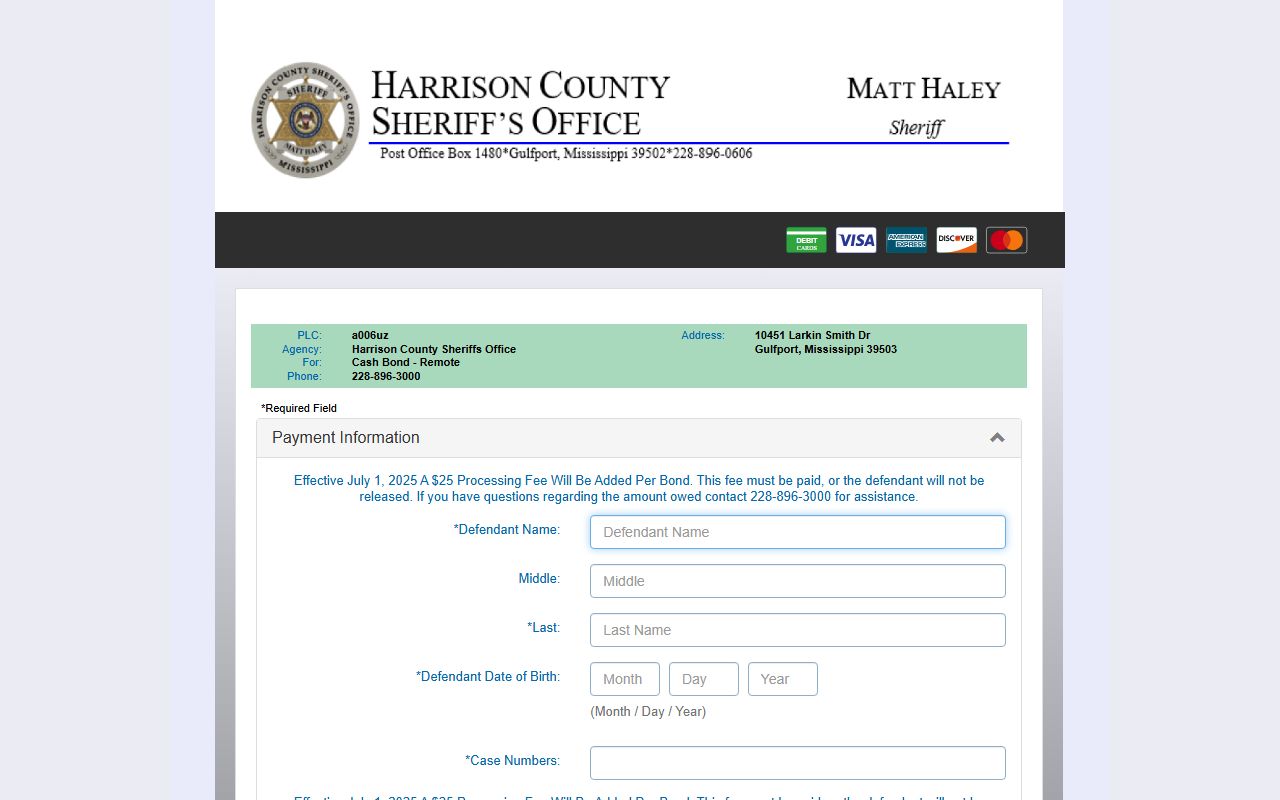
The portal asks for the defendant name, date of birth, and case numbers, and it adds a $25 processing fee per bond that took effect July 1, 2025.
Charges vs. Convictions
Being charged is not the same as being convicted. A charge is an accusation. The Sheriff makes this point plainly: the jail docket reflects detention at the Adult Detention Center and does not by itself mean a conviction on the listed charges. A conviction only comes after a guilty plea or a verdict in court. Both a charge and a conviction can be public, so a careful reader must look at the disposition before drawing any conclusion about guilt.
| Charge | Conviction | |
|---|---|---|
| Stage | Accusation | Verdict or plea |
| Burden of Proof | Probable cause | Beyond reasonable doubt |
| Public Record | Yes | Yes |
Sealed vs. Expunged Records
Some charge records leave public view. A sealed record is hidden from ordinary inspection but still exists. An expunged record is treated as though it never happened. In Mississippi, eligible misdemeanor and some felony convictions may be expunged by petition in the court of conviction under Miss. Code Ann. Section 99-19-71, and successful completion of a qualifying intervention or diversion program can support expunction under Section 99-15-123. An arrest can stay visible until a granted order is processed by the agencies that hold the record.
| Sealed | Expunged | |
|---|---|---|
| Visibility | Hidden from public | Destroyed / treated as never existed |
| Law Enforcement | Limited access | Very limited |
| Eligibility | Set by statute or court order for protected case types | Eligible misdemeanors and some felonies by petition in the court of conviction |
Harrison County offers a practical starting point for this process. The Sheriff's public resources page links an Expungement Handbook, the expungement statutes, and the Motion and Order forms.
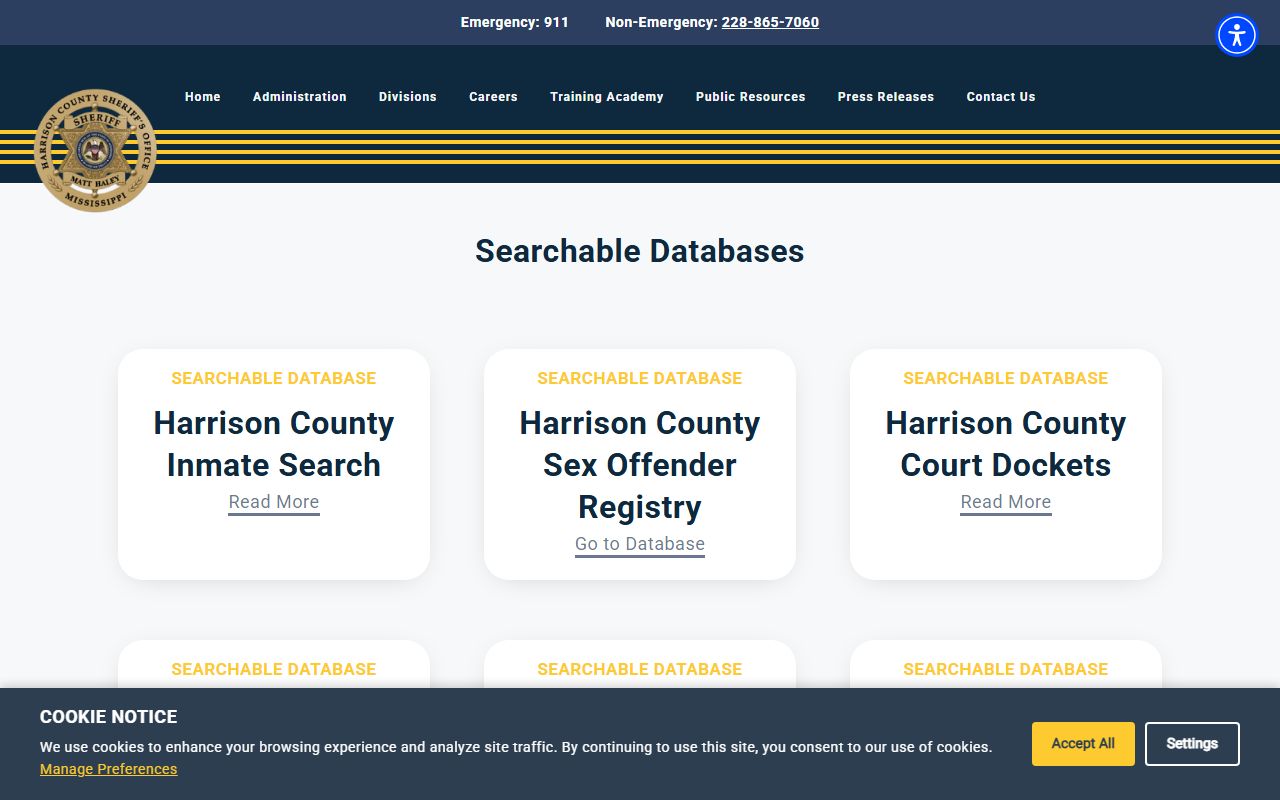
The forms help a person begin, but filing and legal sufficiency are court matters, so the clerk can accept a petition yet cannot give legal advice.
Note: Expungement differs from a simple dismissal, since a dismissed charge can still appear in the record until a qualifying expunction order is entered and processed.
Charge Codes and Severity Levels
Each charge ties back to a statute. The court file lists the Mississippi Code section that defines the offense, along with a short label for the crime. The code matters because it sets the level of the charge and the court that hears it. One arrest can produce several separate charges, and each charge carries its own code and its own status.
Mississippi sorts offenses by severity. Felonies are the most serious and run through Circuit Court, with grand jury indictments for the gravest cases. Misdemeanors are lower offenses handled in Justice, Municipal, or County Court. Many traffic and ordinance matters sit at the lowest level and resolve with a fine. A single booking event can mix levels, so a person may face a felony charge and a misdemeanor charge from the same arrest.
Statewide and Harrison County Criminal History Lookups
A single county search will not show a person's full record. Charges from other counties and prior cases roll up into wider systems. In Harrison County, the Sheriff's Office accepts a criminal history or background request, but that request must be made in person with a state-issued driver's license or identification card. The Circuit Clerk fee schedule also lists criminal record searches for case files held by that office. For a person already sentenced to a state prison, the Mississippi Department of Corrections runs a separate inmate search.
The Sheriff lays out which division to call for each need. The office contact directory separates the Adult Detention Center, the warrants and extradition desk, the records department, and the process and court contacts.
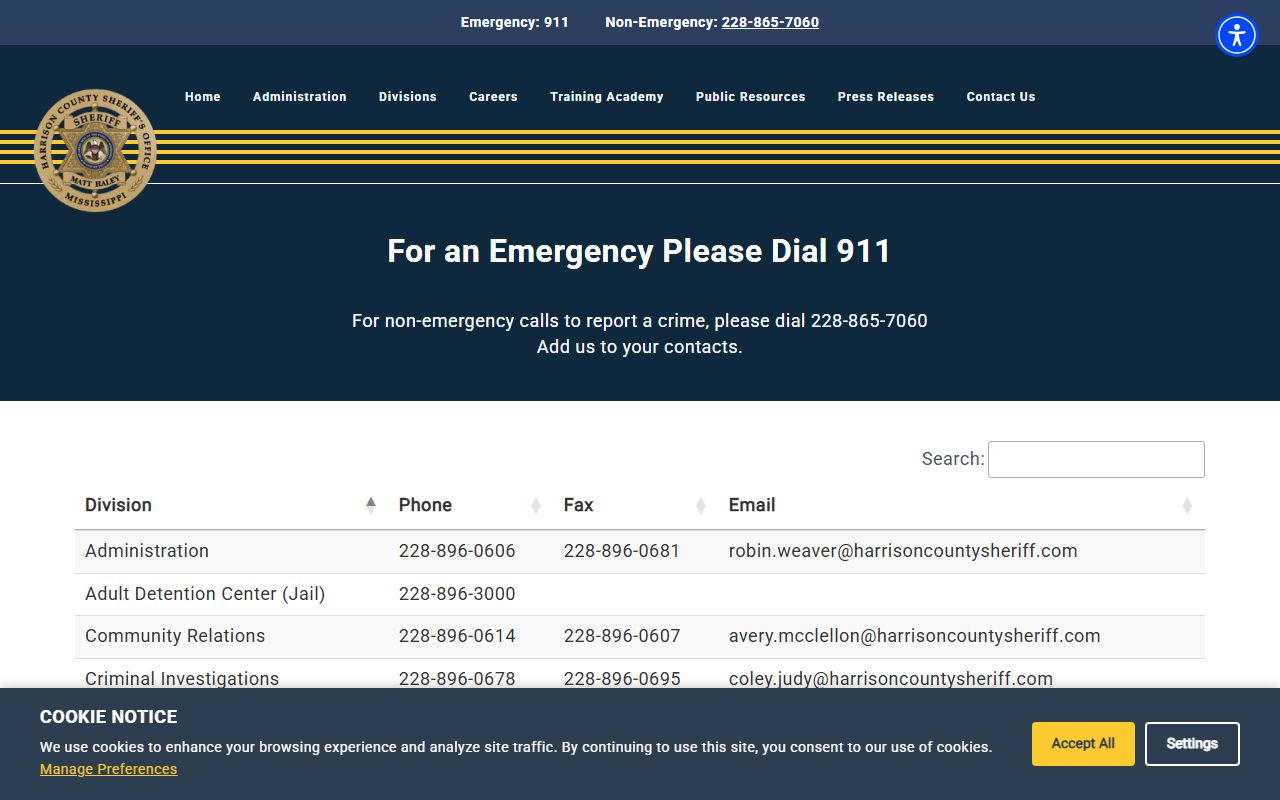
The Public Records Department, reached at 228-896-0626, is the right desk for arrest reports and criminal history request forms rather than the court clerk.
Background Check Considerations
A casual charge lookup and a formal background check are not the same thing. Looking up Harrison County arrest records out of curiosity is one use. Using that data to decide on a job, a rental, credit, or insurance is a regulated use under the federal Fair Credit Reporting Act. That law requires a licensed consumer reporting agency, written consent, and accuracy steps. The Mississippi Public Records Act, Miss. Code Ann. Section 25-61-1 and following, keeps most records open, but open access does not waive the FCRA rules for regulated decisions.
Important: This site is not a consumer reporting agency under the Fair Credit Reporting Act, and its information may not be used for employment, tenant, credit, or insurance screening.
Restricted Charge Records in Harrison County
Not every charge is open to the public. Several record types stay off the ordinary docket no matter how the charge began. Youth Court matters that involve children are confidential under Miss. Code Ann. Section 43-21-261 and Section 43-21-255, so juvenile charges do not show up in the public search tools. Charges that end in a sealed or expunged order also drop out of public view. Records tied to ongoing investigations may be withheld until the case is filed.
Public dockets also redact sensitive details inside an otherwise open case. Social Security numbers, financial account numbers, dates of birth, minor names, and medical information are commonly masked. When a person hits one of these limits, the next step is a public records request to the right office under state law. The Sheriff's records division handles arrest and report data, while the Circuit Clerk and Justice Court clerk handle the court charge files.